
If you’ve ever searched for the best investment strategies, you’ve probably seen dozens of opinions. Some say invest in stocks. Others say real estate. Some push crypto. And a few tell you to just “buy and hold forever.”
So what’s actually right?
Let’s have a real conversation about it — simple, practical, and detailed. I’ll walk you through the most effective investment strategies, explain how they work, and clearly outline their benefits and drawbacks so you can decide what fits your situation.
Because the truth is: the best investment strategies are not the same for everyone.
1. Long-Term Investing (Buy and Hold Strategy)
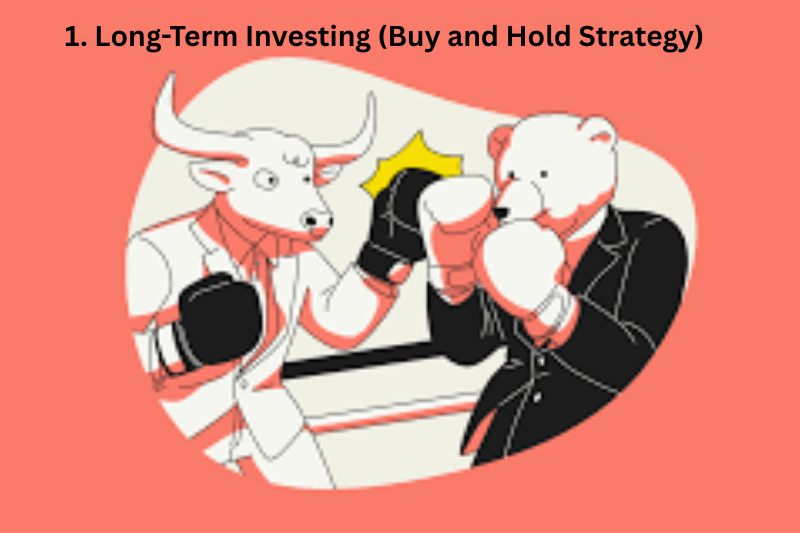
This is one of the most powerful and proven best investment strategies over time.
Instead of constantly buying and selling, you invest in quality assets and hold them for years — sometimes decades.
For example, many long-term investors track major indexes like the S&P 500, which represents 500 of the largest U.S. companies.
How It Works:
- Invest in strong companies or index funds.
- Reinvest dividends.
- Ignore short-term market noise.
- Stay invested through market ups and downs.
Benefits:
- Compounding works in your favor.
- Historically strong long-term returns.
- Lower transaction costs.
- Less emotional stress.
- Tax efficiency (fewer capital gains taxes).
Drawbacks:
- Requires patience.
- Market crashes can be scary.
- Returns are not instant.
- You must tolerate volatility.
If you’re investing for retirement or long-term wealth, this is often one of the best investment strategies available.
2. Passive Investing (Index Fund Investing)
Passive investing means you don’t try to beat the market — you simply invest in it.
Instead of picking individual stocks, you buy index funds or ETFs that track a broad market index.
Large investment firms like Vanguard Group popularized low-cost index fund investing.
How It Works:
- Buy a broad market index fund.
- Invest regularly.
- Hold long-term.
- Rebalance occasionally.
Benefits:
- Very low fees.
- Broad diversification.
- Historically strong performance.
- Minimal time required.
- Reduces emotional decision-making.
Drawbacks:
- You won’t “beat” the market.
- Limited control over specific holdings.
- Market-wide downturns still affect you.
For most beginners, passive investing is one of the best investment strategies because it’s simple and effective.
3. Active Investing (Stock Picking)
Active investing involves researching and selecting individual stocks with the goal of outperforming the market.
Famous investors like Warren Buffett have used active strategies successfully.
How It Works:
- Analyze financial statements.
- Study company fundamentals.
- Evaluate competitive advantages.
- Buy undervalued stocks.
Benefits:
- Potential to outperform the market.
- Greater control over investments.
- Opportunity to capitalize on undervalued stocks.
Drawbacks:
- Requires deep research.
- Higher risk.
- Higher trading costs.
- Emotional decision-making can hurt returns.
- Most investors underperform the market long-term.
Active investing can be rewarding — but it’s time-intensive and not easy.
4. Dollar-Cost Averaging (DCA)
Dollar-cost averaging is about investing a fixed amount at regular intervals — regardless of market conditions.
How It Works:
- Invest the same amount monthly.
- Buy during highs and lows.
- Continue consistently.
Benefits:
- Reduces market timing risk.
- Builds discipline.
- Removes emotional stress.
- Good for beginners.
Drawbacks:
- May underperform lump-sum investing in strong bull markets.
- Requires consistent cash flow.
Still, DCA remains one of the best investment strategies for building long-term wealth steadily.
5. Growth Investing
Growth investing focuses on companies expected to grow faster than the market.
These companies often reinvest profits instead of paying dividends.
How It Works:
- Invest in innovative, expanding companies.
- Focus on revenue and earnings growth.
- Accept higher volatility.
Benefits:
- High potential returns.
- Capital appreciation.
- Exposure to innovation.
Drawbacks:
- High volatility.
- Often expensive valuations.
- Can fall sharply during market downturns.
Growth investing can be powerful — but it requires risk tolerance.
6. Value Investing
Value investing focuses on buying undervalued companies.
The goal is to purchase stocks trading below their intrinsic value.
How It Works:
- Look for low price-to-earnings ratios.
- Analyze balance sheets.
- Identify strong but temporarily struggling companies.
Benefits:
- Margin of safety.
- Potential for price recovery.
- Often includes dividend income.
Drawbacks:
- Some companies stay undervalued for years.
- Requires strong analytical skills.
- Can underperform during growth-driven markets.
Value investing is often considered one of the best investment strategies for disciplined investors.
7. Dividend Investing
Dividend investing focuses on companies that regularly pay shareholders.
How It Works:
- Buy dividend-paying stocks.
- Reinvest dividends.
- Build passive income over time.
Benefits:
- Steady income stream.
- Compounding effect.
- Often lower volatility.
- Psychological comfort during downturns.
Drawbacks:
- Lower growth potential.
- Dividends can be cut.
- Taxable income (in many countries).
Dividend investing is attractive for retirees or income-focused investors.
8. Real Estate Investing
Real estate is a tangible asset and a popular strategy.
You can invest through:
- Rental properties
- Real Estate Investment Trusts (REITs)
- Commercial properties
Benefits:
- Rental income.
- Property appreciation.
- Inflation hedge.
- Portfolio diversification.
Drawbacks:
- Requires capital.
- Illiquid (hard to sell quickly).
- Maintenance and management costs.
- Market-specific risks.
Real estate can be powerful — but it’s not passive unless you invest through REITs.
9. Asset Allocation Strategy
This strategy focuses on dividing investments among asset classes:
- Stocks
- Bonds
- Real estate
- Cash
The mix depends on:
- Age
- Risk tolerance
- Financial goals
Benefits:
- Reduces overall risk.
- Smooths returns.
- Customizable.
Drawbacks:
- Requires periodic rebalancing.
- Conservative allocations may limit returns.
Asset allocation is actually the backbone of most best investment strategies.
Common Mistakes to Avoid
Even the best investment strategies fail when investors:
- Try to time the market.
- Panic sell during crashes.
- Chase trends.
- Overtrade.
- Ignore fees.
- Invest without a plan.
Success is often about avoiding mistakes rather than picking the perfect stock.
You may also like to read these posts:
Which Strategy Is Best for You?

Here’s a simple guideline:
- Beginner? → Passive index investing + Dollar-cost averaging.
- Busy professional? → Passive investing.
- Analytical and experienced? → Active or value investing.
- Income-focused? → Dividend investing.
- Long-term wealth builder? → Long-term diversified strategy.
In reality, many successful investors combine multiple approaches.
Final Thoughts
When people ask about the best investment strategies, they’re often hoping for a shortcut.
But here’s the honest answer:
The best investment strategies are:
- Long-term focused
- Diversified
- Low-cost
- Consistent
- Emotionally disciplined
Investing is not about getting rich fast.
Frequently Asked Questions (FAQs) About Best Investment Strategies
1. What is the best investment strategy for beginners?
For beginners, the safest and most effective approach is:
Invest in broad market index funds
Use dollar-cost averaging
Stay invested for the long term
2. Are the best investment strategies the same for everyone?
No.
The best investment strategies depend on:
Your financial goals
Your risk tolerance
Your investment timeline
Your income level
Your experience
3. How much money do I need to start investing?
You don’t need a large amount to start.
Many platforms allow you to invest with small amounts. Thanks to ETFs and fractional shares, you can begin with:
$10
$50
$100 per month
4. Is stock market investing risky?
Yes, stocks carry risk — but risk doesn’t mean danger if managed properly.
Markets like the S&P 500 have shown long-term growth despite short-term volatility.
Risk can be reduced through:
Diversification
Long-term holding
Asset allocation
5. What is better: active investing or passive investing?
It depends on your skills and goals.
Passive investing:
Lower cost
Less time required
Less stress
Suitable for most people
.