
If you’re new to managing money, creating a budget plan for beginners might feel confusing or overwhelming. You may think budgeting is only for people who struggle financially — but in reality, budgeting is for anyone who wants clarity, stability, and financial growth.
In this detailed guide, I will walk you step-by-step through how to build a practical budget, explain the benefits and drawbacks of budgeting, and help you understand how to make it work in real life.
Let’s start from the beginning.
What Is a Budget Plan?
A budget is simply a plan for how you will spend and save your money over a specific period, usually monthly. A budget plan for beginners focuses on simplicity and clarity. It helps you:
- Understand how much money you earn
- Track where your money goes
- Control spending
- Save consistently
- Avoid unnecessary debt
Instead of guessing or reacting to expenses, you make intentional financial decisions.
Why a Budget Plan for Beginners Is Important
Many people avoid budgeting because they believe it will restrict their lifestyle. However, the purpose of budgeting is not restriction — it is direction.
When you create a structured financial plan, you reduce stress and increase control. You move from uncertainty to awareness.
Without a budget:
- Spending becomes impulsive
- Savings become inconsistent
- Debt may grow unnoticed
- Financial goals remain unclear
With a budget:
- You know your limits
- You make informed choices
- You build long-term security
Step-by-Step Guide to Creating a Budget Plan for Beginners
Step 1: Calculate Your Total Monthly Income
Begin with your take-home income (after taxes and deductions).
Include:
- Salary or wages
- Freelance income
- Side business earnings
- Rental income
- Any regular financial support
If your income varies, calculate the average of the past 3–6 months and use the lowest reasonable amount to stay conservative.
This number becomes the foundation of your budget.
Step 2: Track All Monthly Expenses
Before making changes, you need a clear picture of where your money goes.
Track expenses for at least one full month.
Fixed Expenses (usually the same each month):
- Rent or mortgage
- Insurance
- Loan payments
- Subscriptions
- Internet
Variable Expenses (change month to month):
- Groceries
- Utilities
- Transportation
- Dining out
- Entertainment
- Shopping
Even small purchases matter. Small expenses, when repeated, add up significantly over time.
Tracking creates awareness, and awareness creates control.
Step 3: Categorize Needs vs Wants
Divide your expenses into two main categories:
Needs (Essential Expenses)
- Housing
- Utilities
- Basic groceries
- Transportation
- Insurance
- Minimum debt payments
Wants (Lifestyle Choices)
- Restaurant meals
- Streaming services
- Shopping for non-essentials
- Travel upgrades
- Premium subscriptions
This step helps you see where you can reduce spending without affecting your essential living standards.
Step 4: Choose a Budgeting Method
A strong budget plan for beginners should be simple. Here are three beginner-friendly methods:
1. The 50/30/20 Rule
- 50% → Needs
- 30% → Wants
- 20% → Savings and debt repayment
This method works well for those with stable income.
2. Zero-Based Budget
Every dollar has a job. Income minus expenses equals zero.
This method requires detailed planning but offers strong control.
3. Envelope System
Cash is divided into envelopes for different categories. When the envelope is empty, spending stops.
This is helpful for people who struggle with overspending.
Choose the method that matches your personality and discipline level.
Step 5: Build an Emergency Fund
An emergency fund protects you from unexpected expenses like medical bills, job loss, or urgent repairs.
Recommended targets:
- Beginner goal: $500–$1,000
- Long-term goal: 3–6 months of living expenses
Without emergency savings, unexpected expenses often lead to debt.
Step 6: Manage and Reduce Debt
Debt can limit financial growth. A good budget plan for beginners includes a debt repayment strategy.
Snowball Method
Pay off the smallest debt first for psychological motivation.
Avalanche Method
Pay off the highest interest rate first to save money long term.
Both methods work. Choose the one that keeps you consistent.
Step 7: Set Short-Term and Long-Term Goals
Budgeting becomes meaningful when tied to goals.
Short-term goals:
- Vacation fund
- New phone
- Emergency savings
Long-term goals:
- Home ownership
- Retirement savings
- Business investment
Clear goals increase motivation and focus.
Benefits of a Budget Plan for Beginners
Creating a budget offers several advantages:
1. Financial Awareness
You gain complete visibility of your income and expenses.
2. Reduced Stress
Knowing your financial position reduces anxiety about money.
3. Better Saving Habits
Savings become intentional and consistent.
4. Debt Control
You avoid unnecessary borrowing and manage existing debt effectively.
5. Goal Achievement
You can systematically work toward financial goals.
6. Improved Spending Discipline
Impulse spending decreases when limits are clearly defined.
You may also like to read these posts:
Drawbacks of a Budget Plan for Beginners
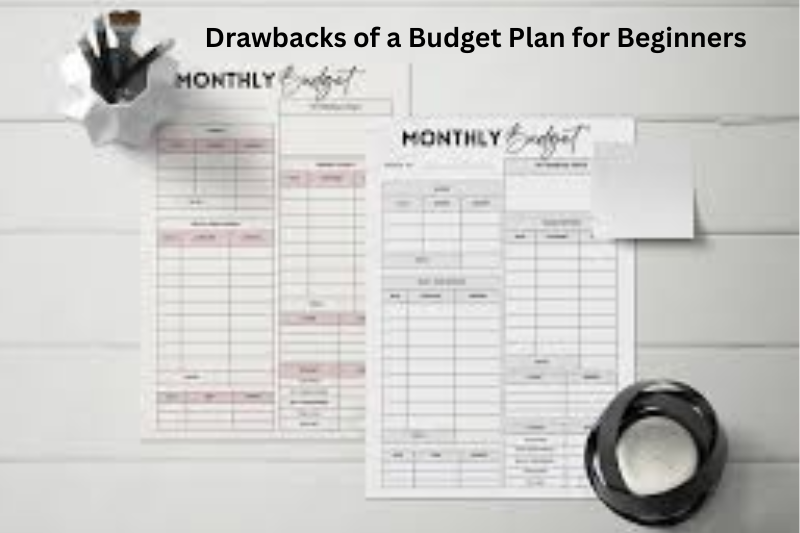
Although budgeting is beneficial, it does have potential drawbacks:
1. Time-Consuming Initially
Tracking expenses and organizing categories takes effort at the beginning.
2. Feels Restrictive
Some people may feel limited when they first start controlling spending.
3. Requires Discipline
Without consistency, a budget becomes ineffective.
4. Adjustment Period
The first few months may require corrections and improvements.
5. Income Fluctuations Can Complicate Planning
Irregular income makes budgeting more challenging but not impossible.
Understanding these drawbacks helps you prepare mentally and stay committed.
Common Mistakes Beginners Should Avoid
- Setting unrealistic limits
- Ignoring small purchases
- Forgetting irregular expenses (annual fees, birthdays, repairs)
- Quitting after one bad month
- Not reviewing the budget regularly
Budgeting is a process of improvement, not perfection.
Tips to Make Your Budget Sustainable
- Keep categories simple
- Allow some spending for enjoyment
- Review your budget monthly
- Automate savings if possible
- Adjust when life changes
Flexibility is key. A budget should support your life, not control it completely.
Final Thoughts
A budget plan for beginners is not about limiting your lifestyle — it is about gaining clarity and building financial stability.
At first, budgeting may feel unfamiliar or even uncomfortable. However, once you develop the habit, it becomes a powerful tool for financial freedom.
Start simple.
Stay consistent.
Review regularly.
FAQs
1. What is a budget plan for beginners?
A budget plan for beginners is a simple, easy-to-follow financial plan that helps you track income, manage expenses, save money, and plan for future goals. It’s designed to give clarity and control without being overly complicated.
2. Why should I create a budget?
Budgeting helps you understand where your money goes, avoid unnecessary debt, save for emergencies, and achieve your financial goals. It also reduces stress and gives you confidence in managing your finances.
3. How much time does it take to create a budget?
For beginners, setting up a budget might take a few hours initially. Tracking your expenses and adjusting your budget may take 10–15 minutes daily or weekly. Over time, it becomes easier and quicker.
4. Which budgeting method is best for beginners?
The 50/30/20 rule is the easiest starting point:
50% for needs
30% for wants
20% for savings and debt repayment
Other methods like zero-based budgeting or the envelope system can be used once you feel more comfortable managing money.
5. How do I track my expenses?
You can track expenses using:
A notebook or journal
Excel or Google Sheets
Budgeting apps like Mint, YNAB, or Goodbudget
Bank and credit card statements