
Let’s talk honestly for a moment. Most people don’t struggle with money because they don’t earn enough. They struggle because they don’t have a clear plan. That’s where smart budget strategies come in.
Budgeting is not about restricting your life or saying “no” to everything fun. It’s about telling your money where to go instead of wondering where it went. When done correctly, smart budget strategies reduce stress, improve decision-making, and help you build long-term financial stability.
In this detailed guide, we’ll walk step-by-step through effective budgeting methods, along with the benefits and potential drawbacks of each approach so you can choose what works best for you.
What Are Smart Budget Strategies?
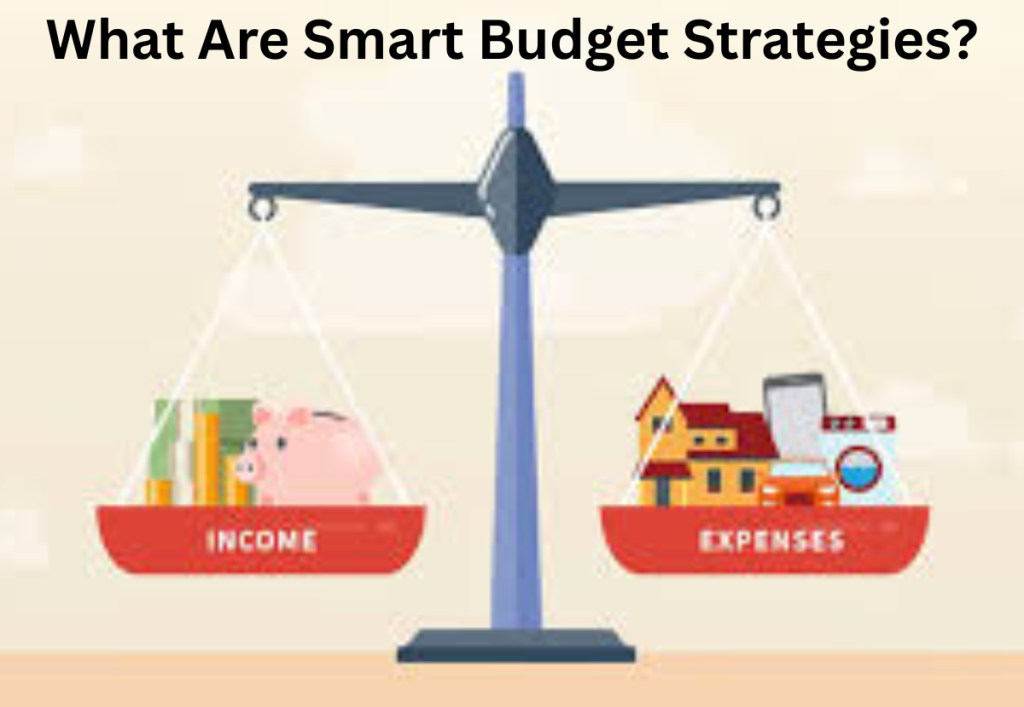
Smart budget strategies are structured methods for managing income, expenses, savings, and financial goals in a deliberate and organized way. Instead of reacting to bills and expenses, you proactively plan your spending and saving.
These strategies are built around three core principles:
- Awareness – Knowing exactly how much you earn and spend
- Intentionality – Aligning spending with priorities
- Consistency – Repeating good financial habits over time
Now let’s explore practical ways to apply them.
1. Track Every Dollar
Before improving your finances, you must understand them.
Start by tracking:
- Monthly income (salary, side income, freelance work)
- Fixed expenses (rent, utilities, loan payments)
- Variable expenses (groceries, dining out, shopping)
- Irregular expenses (annual subscriptions, car maintenance)
You can use spreadsheets or budgeting tools like YNAB (You Need A Budget), which encourages assigning every dollar a specific purpose.
Benefits
- Reveals spending leaks
- Creates clarity and awareness
- Helps identify unnecessary expenses
- Forms the foundation of all smart budget strategies
Drawbacks
- Time-consuming at first
- Can feel overwhelming if finances are disorganized
- Requires discipline to maintain
Despite the initial effort, tracking is essential. Without visibility, improvement is impossible.
2. Use the 50/30/20 Budgeting Framework
One of the most popular smart budget strategies is the 50/30/20 rule:
- 50% for needs (housing, utilities, groceries, insurance)
- 30% for wants (entertainment, hobbies, travel)
- 20% for savings and debt repayment
This structure offers balance. You still enjoy your money while building financial security.
Benefits
- Simple and easy to follow
- Prevents extreme restriction
- Encourages consistent saving
- Works well for beginners
Drawbacks
- May not fit high-cost living areas
- Less flexible for irregular income
- May require adjustments for debt-heavy households
This method works best as a starting framework, not a rigid rule.
3. Pay Yourself First
Instead of saving what’s left over, transfer savings immediately when income arrives. Automate the process if possible.
For example, some financial platforms like Chime offer automatic savings features that help remove temptation.
Benefits
- Builds savings consistently
- Reduces reliance on willpower
- Accelerates financial goals
- Encourages long-term discipline
Drawbacks
- Can strain cash flow if income is tight
- May cause overdrafts if not monitored
- Requires careful planning of bill due dates
This strategy is one of the most powerful smart budget strategies because automation removes emotional spending decisions.
4. Build an Emergency Fund
Unexpected expenses are not a matter of “if,” but “when.” Financial experts like Dave Ramsey recommend starting with $1,000 and eventually building 3–6 months of living expenses.
Benefits
- Reduces financial stress
- Prevents reliance on high-interest debt
- Provides stability during job loss or emergencies
- Increases financial confidence
Drawbacks
- Takes time to build
- Can feel slow and unrewarding initially
- Requires sacrificing short-term spending
Even though it requires patience, an emergency fund transforms financial crises into manageable inconveniences.
5. The Envelope or Cash Method
If overspending is a challenge, allocate physical cash to spending categories. When the cash runs out, spending stops.
Benefits
- Increases spending awareness
- Prevents impulse purchases
- Creates firm spending boundaries
- Ideal for discretionary categories
Drawbacks
- Less convenient than digital payments
- Not practical for online purchases
- Requires consistent organization
This is one of the more hands-on smart budget strategies, but it works extremely well for those who struggle with self-control around spending.
6. Reduce Fixed and Variable Expenses Strategically
Smart budgeting is not just about tracking — it’s about optimizing.
Consider:
- Negotiating insurance premiums
- Refinancing high-interest debt
- Canceling unused subscriptions
- Buying generic brands
- Cooking at home more frequently
Benefits
- Immediate impact on cash flow
- Frees up money for savings
- Increases long-term financial efficiency
Drawbacks
- Requires research and effort
- Some savings may be minimal
- Can feel restrictive if taken too far
The key is balance. Cutting expenses should support your goals, not eliminate enjoyment.
7. Increase Income as Part of Your Budget Strategy
Many people overlook income growth when thinking about budgeting. But one of the smartest budget strategies is focusing on both sides of the equation: income and expenses.
Options include:
- Freelancing
- Selling unused items
- Learning a new skill
- Starting a side business
- Negotiating a raise
Benefits
- Speeds up debt repayment
- Accelerates savings growth
- Reduces financial pressure
- Expands opportunities
Drawbacks
- Requires additional time and effort
- May lead to burnout
- Income can be inconsistent
You may also like to read these posts:
While cutting expenses has limits, increasing income often has greater long-term potential.
Overall Benefits of Smart Budget Strategies

When consistently applied, smart budget strategies provide:
- Greater financial clarity
- Reduced stress and anxiety
- Improved decision-making
- Better debt management
- Stronger savings habits
- Long-term wealth building
- Increased confidence and control
Most importantly, they create financial freedom over time.
Potential Drawbacks of Budgeting
While budgeting is powerful, it is not perfect. Possible downsides include:
- Initial frustration or overwhelm
- Time commitment
- Emotional resistance to change
- Risk of becoming overly restrictive
- Difficulty maintaining consistency
However, these drawbacks are usually temporary. As habits form, budgeting becomes second nature.
Final Thoughts
Smart budget strategies are not about being perfect. They are about being intentional and consistent. You do not need to overhaul your finances overnight. Start with one strategy. Master it. Then build from there.
The real power of budgeting is not in cutting expenses — it is in gaining control. When you know where your money goes and why, you reduce uncertainty and increase confidence.
Financial stability is not achieved through luck. It is built through small, consistent decisions made over time.
Faqs
1. What are smart budget strategies?
Smart budget strategies are practical methods and techniques for managing your money effectively. They help you track income, control expenses, save consistently, and reach financial goals without unnecessary stress or restriction.
2. Why is budgeting important?
Budgeting provides clarity and control over your finances. It helps you avoid overspending, prepare for emergencies, save for the future, and reduce financial stress.
3. What is the best budgeting method for beginners?
The 50/30/20 rule is ideal for beginners because it is simple:
50% for needs
30% for wants
20% for savings and debt repayment
It’s flexible and easy to follow while building strong financial habits.
4. How do I start tracking my expenses?
You can start by:
Using a spreadsheet or notebook to record all income and expenses
Using apps like YNAB or Mint
Tracking every purchase for at least one month to understand spending patterns
5. What is “pay yourself first”?
This is a budgeting strategy where you save a portion of your income as soon as you get paid, rather than saving whatever is left at the end of the month. Automating this ensures consistent saving and builds your financial security faster.